Introduction to Natural Silk
Silk is often called the "queen of fabrics" and for good reason. This natural protein fiber is produced by silkworms during the formation of their cocoons. With its smooth, lustrous appearance and incredibly soft feel, silk has been treasured for thousands of years as the ultimate luxury fiber.
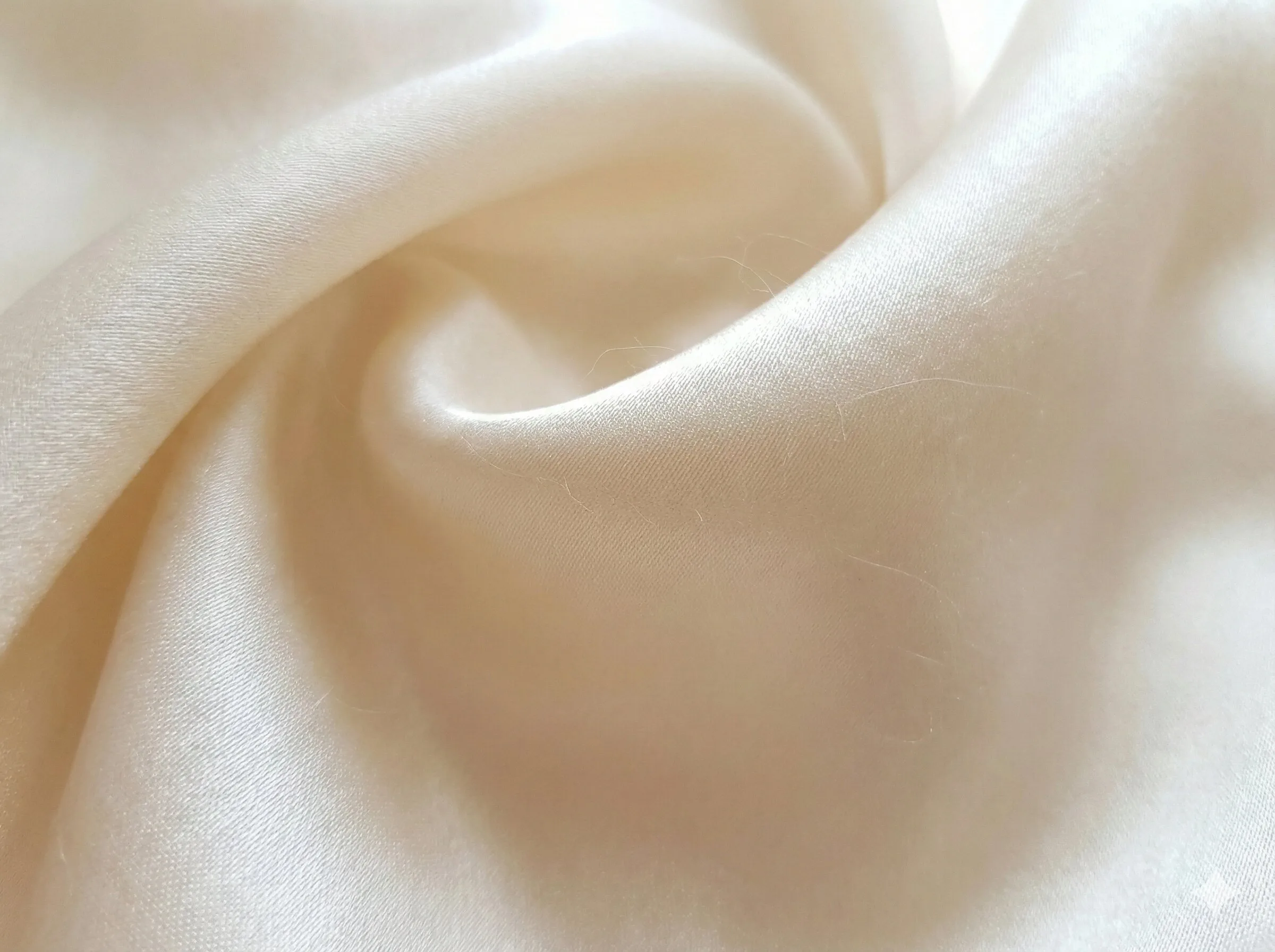
Natural silk fabric showcasing its characteristic sheen and smooth texture
The unique properties of silk come from its composition. Silk is primarily made of fibroin, a protein that gives the fiber its strength and smoothness. The triangular prism-like structure of silk fibers allows them to refract light at different angles, creating silk's famous shimmer and luster.
Silk Production Process
Traditional silk production begins with silkworms, specifically the larvae of the mulberry silkworm moth (Bombyx mori). The process involves several stages:
Mulberry Cultivation
Mulberry trees are cultivated for their leaves, which are the exclusive food source for silkworms.
Silkworm Rearing
Silkworms feed exclusively on mulberry leaves for about 35 days before spinning their cocoons.
Cocoon Formation
Each cocoon contains a single continuous silk thread that can be up to 1,000 yards long.
After the cocoons are formed, they're typically heated to kill the pupae inside, then soaked in hot water to soften the sericin (a gummy substance) that holds the cocoon together. The silk threads are then unwound and processed into yarn.
Benefits of Silk Fabric
Silk offers numerous advantages that make it a preferred choice for luxury garments:
- Temperature Regulation: Silk naturally adjusts to body temperature, keeping you cool in summer and warm in winter
- Moisture Management: Absorbs up to 30% of its weight in moisture without feeling damp
- Hypoallergenic Properties: Contains sericin proteins that resist dust mites and allergens
- Smooth Texture: The smooth surface reduces friction against skin and hair
- Natural UV Protection: Provides some protection against harmful UV rays
- Durability: Despite its delicate feel, silk is one of the strongest natural fibers
These properties make silk particularly beneficial for sensitive skin, making it a popular choice for pillowcases and sleepwear to reduce skin irritation and hair breakage.
Silk Care Instructions
Proper care extends the life of silk garments significantly:
Washing Silk
- Hand wash in cold water (below 30°C) with a gentle detergent
- Use a specialized silk or delicates detergent
- Avoid wringing or twisting the fabric
- Rinse thoroughly with clean water
Drying Silk
- Lay flat on a clean towel and roll gently to remove excess water
- Reshape garment while damp and lay flat to dry
- Avoid direct sunlight and heat sources
- Never tumble dry silk
Storing Silk
- Hang silk garments on padded hangers
- Store in breathable garment bags
- Avoid plastic covers for long-term storage
- Keep away from direct sunlight
Silk vs Other Luxury Fibers
| Fiber Type | Softness | Strength | Breathability | Price Range |
|---|---|---|---|---|
| Natural Silk | ★★★★★ | ★★★★☆ | ★★★★☆ | High |
| Cashmere | ★★★★★ | ★★★☆☆ | ★★★★★ | Very High | Alpaca | ★★★★☆ | ★★★★☆ | ★★★★★ | Medium-High |
Sustainable Silk Options
While traditional silk production raises ethical concerns, several sustainable alternatives exist:
When purchasing silk, look for certifications like OEKO-TEX Standard 100 to ensure the fabric is free from harmful substances and produced sustainably.