Introduction to Pure Cashmere
Cashmere is often referred to as the "diamond fiber" due to its exceptional softness, warmth, and rarity. Unlike sheep's wool, cashmere comes from the fine undercoat of cashmere goats, primarily found in high-altitude regions of Mongolia, China, Iran, Afghanistan, and other Central Asian countries.
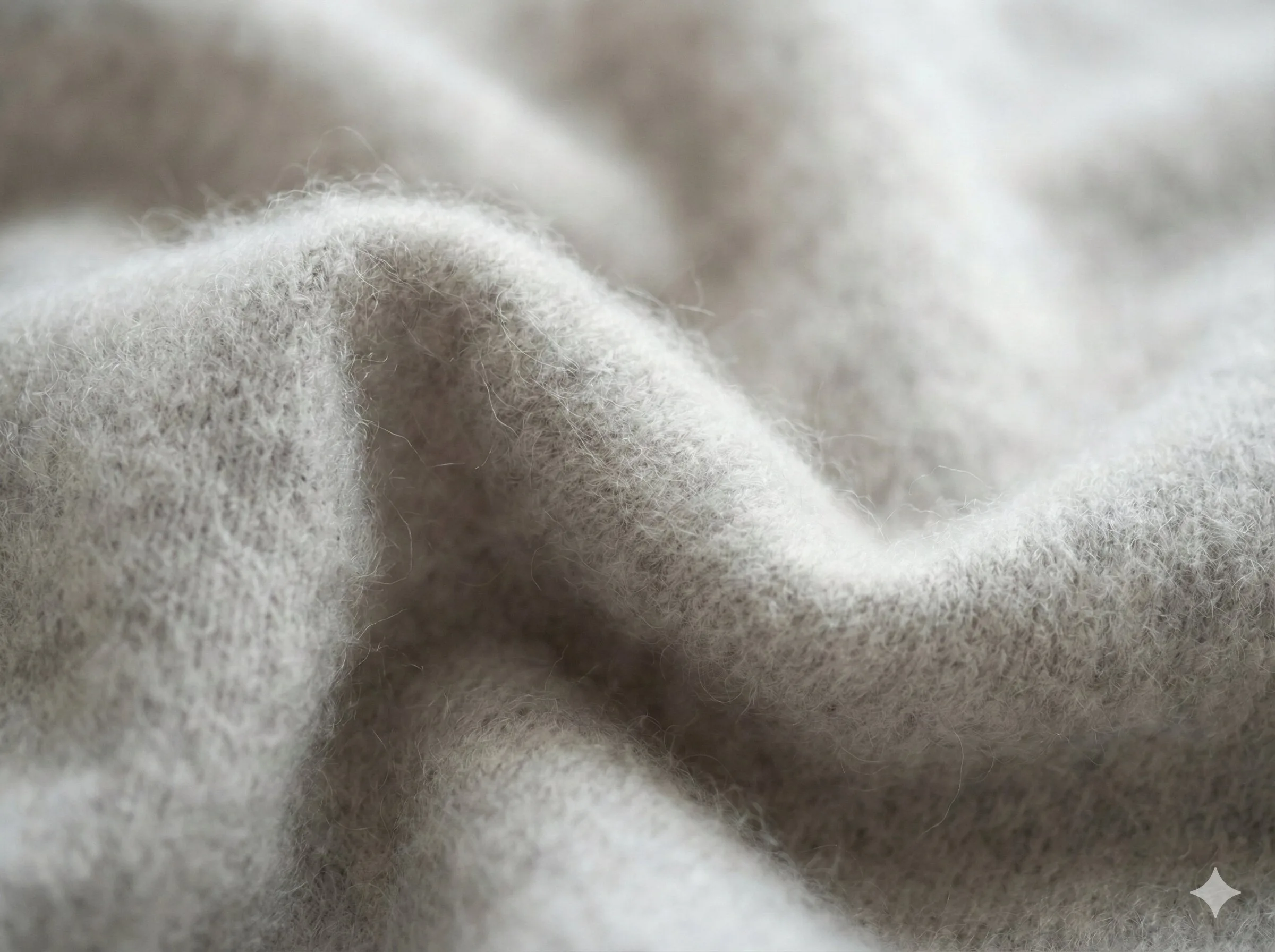
Pure cashmere fabric demonstrating its ultra-soft texture and luxurious feel
The unique properties of cashmere come from the fineness of its fibers. Cashmere fibers are typically 14-19 microns in diameter, compared to 20-40 microns for sheep's wool. This extreme fineness is what gives cashmere its unparalleled softness and makes it three times warmer than sheep's wool of the same weight.
Cashmere Production Process
Authentic cashmere production is labor-intensive and occurs only once a year during the molting season in spring:
High Altitude Origin
Cashmere goats live in harsh mountain climates, producing finer fibers to survive extreme temperatures.
Manual Harvesting
Fine undercoat is carefully combed from goats during molting season, not sheared.
Meticulous Sorting
Raw fibers are sorted by hand to separate coarse guard hairs from fine undercoat.
It takes approximately four years of combing to produce enough cashmere for a single sweater. Only about 150-200 grams of cashmere can be collected from one goat annually, making it one of the rarest natural fibers in the world.
Benefits of Cashmere Fabric
Cashmere offers unique advantages that distinguish it from other luxury fibers:
- Unmatched Softness: Ultra-fine fibers create a silky, luxurious feel against the skin
- Superior Insulation: Traps air efficiently, providing warmth without bulk
- Lightweight Comfort: Three times warmer than sheep's wool but much lighter
- Natural Moisture Regulation: Absorbs and releases moisture without feeling damp
- Hypoallergenic Properties: Lacks lanolin, making it suitable for sensitive skin
- Shape Retention: Maintains form and appearance with proper care
The hollow structure of cashmere fibers creates tiny air pockets that provide exceptional insulation. This makes cashmere ideal for cold weather while remaining breathable enough for layering.
Cashmere Care Instructions
Proper care maintains cashmere's luxurious qualities for decades:
Washing Cashmere
- Hand wash in cool water (below 20°C) with a gentle cashmere or wool detergent
- Use minimal agitation to preserve fiber structure
- Never wring or twist cashmere garments
- Rinse in water of the same temperature to prevent shock
Drying Cashmere
- Lay flat on a clean towel to dry naturally
- Reshape while damp to maintain original form
- Never hang cashmere while wet or dry it in direct sunlight
- Never use a dryer or heating device
Storing Cashmere
- Fold and store in breathable containers or drawers
- Use cedar blocks or lavender sachets to deter moths
- Avoid plastic bags for long-term storage
- Consider vacuum storage bags for seasonal items
Cashmere vs Other Luxury Wools
| Fiber Type | Softness | Warmth | Weight | Price Range |
|---|---|---|---|---|
| Pure Cashmere | ★★★★★ | ★★★★★ | ★★★★★ | Very High |
| Merino Wool | ★★★★☆ | ★★★★☆ | ★★★★☆ | Medium-High |
| Alpaca | ★★★★☆ | ★★★★★ | ★★★★☆ | Medium |
Sustainable Cashmere Options
Responsible cashmere production focuses on animal welfare and environmental preservation:
Look for certifications like the Cashmere & Camel Hair Manufacturers Institute (CCHMI) standards when purchasing cashmere to ensure authenticity and ethical sourcing.